The Red Dot Healing Theory
English
Bhikkhu Raṭṭhapāla
2026
80
The Red Dot Healing Theory
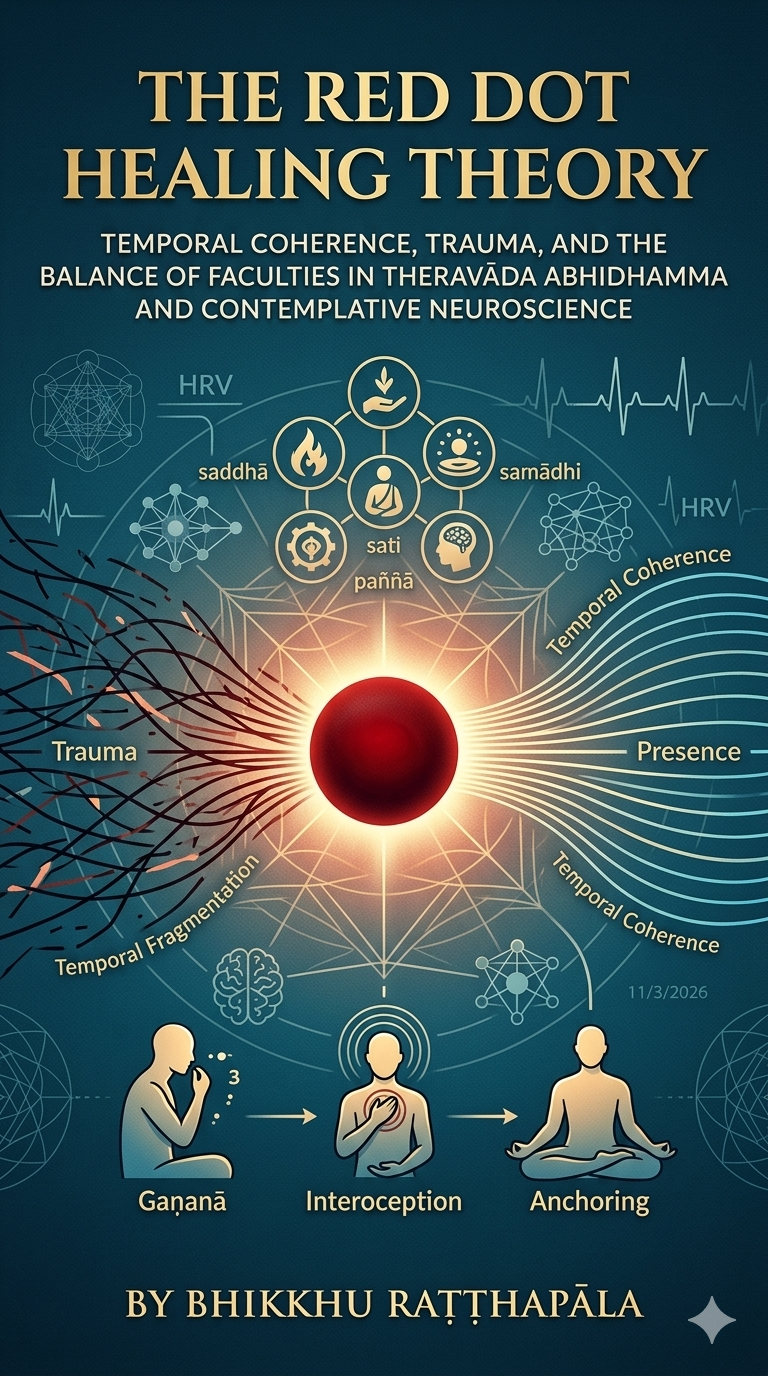
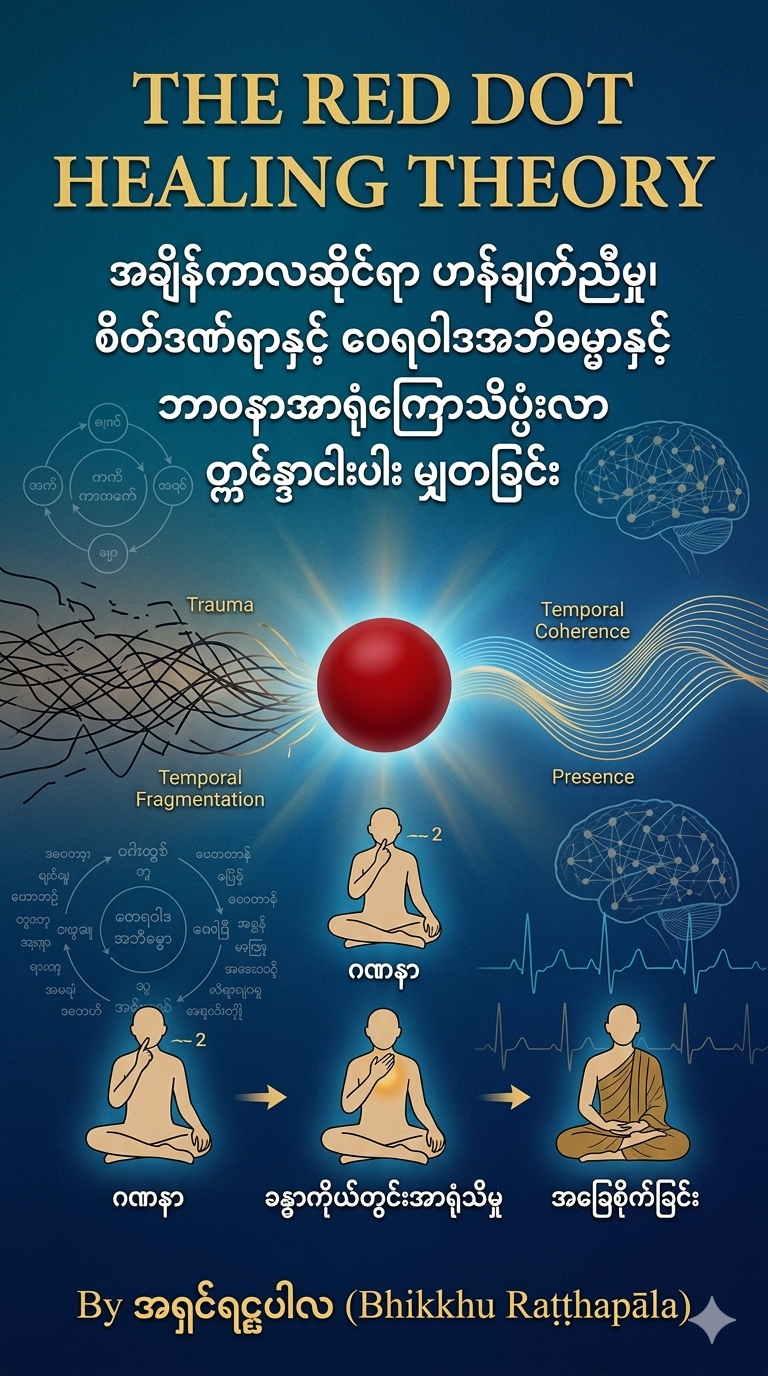
Temporal Coherence, Trauma, and the Balance of Faculties in Theravāda Abhidhamma and Contemplative Neuroscience
This research presents the Red Dot Healing Theory, a contemplative framework developed from years of meditation practice, Abhidhamma study, and reflection on the challenges faced by modern practitioners.
The central insight of this work is simple yet profound: much of human suffering arises from a loss of presence. The mind is constantly pulled into memories of the past or projections of the future, making it difficult to remain grounded in the living moment. Classical Buddhist teachings describe this instability through the dynamics of craving (lobha), aversion (dosa), and delusion (moha), which disrupt the natural balance of the mind.
At the same time, contemporary trauma research shows that psychological suffering often involves a fragmentation of temporal experience. Trauma can trap consciousness in the past or propel it into anxious anticipation of the future, leaving the present moment difficult to inhabit.
This thesis brings these two perspectives into dialogue. Drawing from Theravāda Abhidhamma, the Visuddhimagga meditation system, and modern trauma studies, it proposes that healing and awakening both depend on the restoration of temporal coherence—the capacity to return to and remain within the present moment.
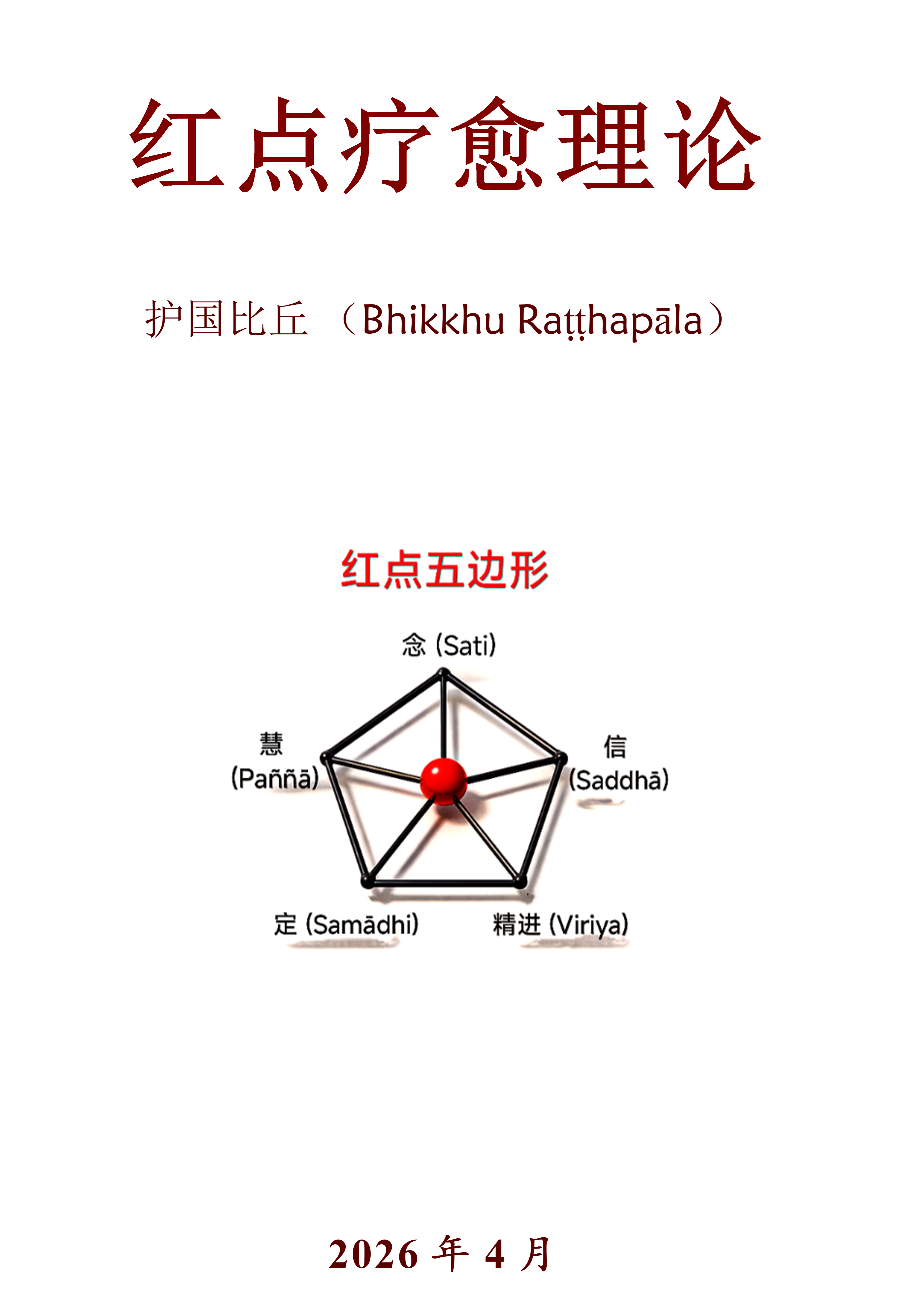
The “Red Dot” is used as a symbol of this restoration. It represents the point of equilibrium where the five spiritual faculties—faith (saddhā), energy (vīriya), mindfulness (sati), concentration (samādhi), and wisdom (paññā)—come into balanced alignment. When these faculties harmonize, awareness stabilizes, the nervous system settles, and the conditions for insight naturally arise.
From this perspective, meditation is not only a path to liberation but also a process of psychological integration and embodied healing. Through practices such as mindfulness of breathing (ānāpānasati) and structured breath awareness, practitioners gradually rediscover the stability of presence that trauma and habitual mental proliferation have disrupted.
The Red Dot Healing Theory therefore offers a bridge between ancient contemplative wisdom and contemporary understanding of the mind and body. It suggests that the return to the present moment—what the Buddha called paccuppanna dhamma—is not only the foundation of insight, but also the ground of healing.
Ultimately, the “red dot” is not something to attain.
It is the rediscovery of a balance that has always been available within the living experience of the present.